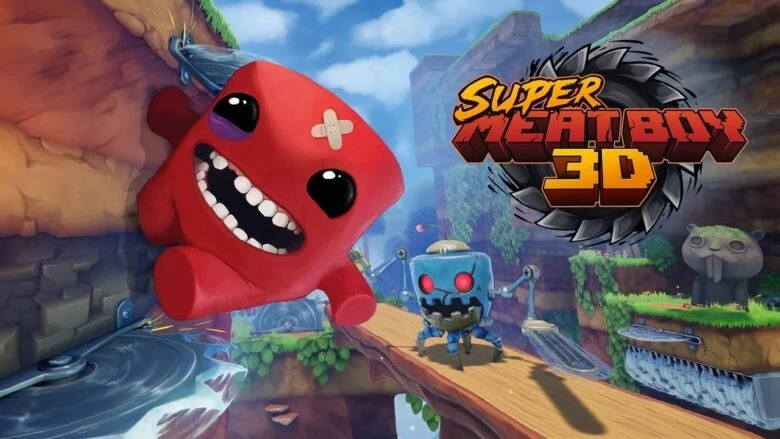

The original Super Meat Boy was defined by extreme speed and precision. Players were required to execute perfect jumps while dodging lethal sawblades and salt waterfalls. Translating this momentum-based gameplay into 3D – where the added Z-axis introduces new layers of complexity – presented a challenge that many considered an impossible design puzzle for the developers to solve.
While the effort from Sluggerfly and Team Meat is respectable, Super Meat Boy 3D does not fully overcome these perspective issues. Many deaths occur because a jump that looks accurate actually lands slightly off the intended platform. Fortunately, the levels remain short and the respawn system is nearly instant, making these deaths a minor inconvenience rather than a source of deep frustration.
The 2010 Xbox Live Arcade classic established the series’ identity: a cube of meat chasing a tuxedo-wearing embryo to save his bandage-cube girlfriend. Stages in that game were lightning-fast, usually lasting under 45 seconds. This allowed the focus to remain on ultra-tough platforming challenges where players were expected to die repeatedly while perfecting their movements.
Simplest way to describe the game is the title

Simplest way to describe Super Meat Boy 3D is to look at its title. It is the same core formula adapted into a three-dimensional environment. The narrative remains the same, with Meat Boy chasing Dr. Fetus across five worlds. The game includes several returning features:
- Three-phase boss battles at the end of every world.
- Dark World versions of levels unlocked by A+ ranks.
- Unlockable guest characters found by collecting bandages.
This multi-layered goal system effectively extends the game’s duration for players of various skill levels. While the Light World can be completed in about four hours, earning A+ ranks adds another four hours of gameplay. For those seeking total completion, hunting for bandages requires finishing levels without dying – a high-stakes task that offers significant replay value.
Challenges of the Z-axis
The developers successfully translated Meat Boy’s unique agility into the 3D space. He remains fast and capable of stopping instantly, with jump heights determined by how long the button is held. Whether executing long leaps or small hops over saws, the controls are responsive enough to handle the demanding level design, even if the transition requires some adjustment.
There is a distinct learning curve regarding character movement. By default, Meat Boy moves in 45-degree increments, restricting him to eight directions even when using an analog stick. While this helps players maintain a straight line on certain platforms, it can make movement feel stiff. It is a system that takes time to master, and it never quite achieves the fluid perfection of the 2D original.
To help players manage the tricky 3D perspective, a new air dash ability was added to the moveset. This allows for mid-air trajectory corrections, which is vital for reaching walls or platforms when a jump is slightly misaligned. It also serves as a speedrunning technique, as combining short jumps with dashes can generate more speed than running, helping players chase faster completion times.
Effective introduction of level hazards
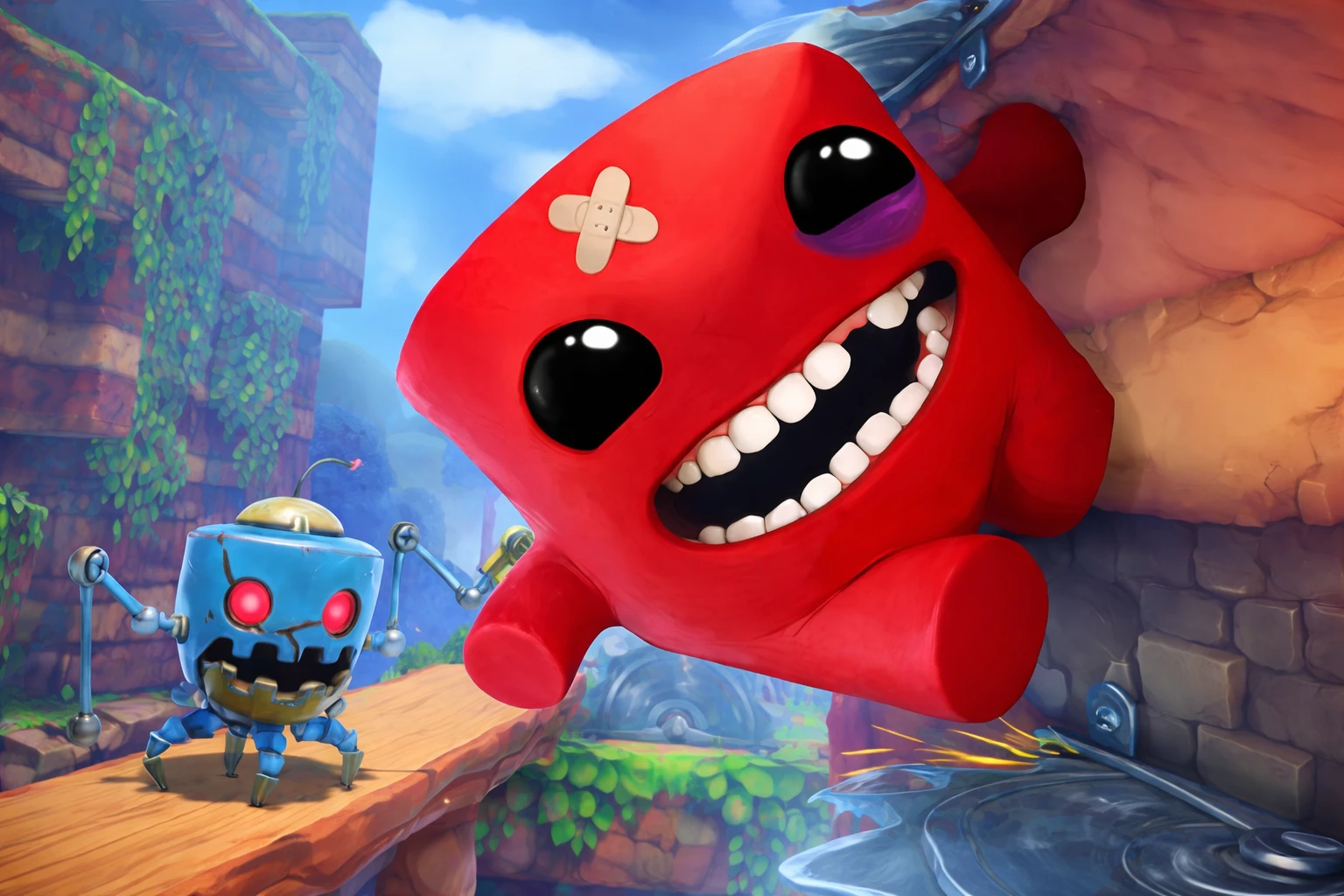
The game excels at introducing new hazards across its stages to keep the experience engaging. Players transition from simple obstacle courses to vertical levels involving wall-sliding and high-speed sections where they must dodge homing missiles. Each world maintains a unique atmosphere, and even when familiar traps reappear, they are used in ways that keep the platforming challenges feeling fresh.
However, the quality of these levels can be inconsistent due to camera issues. While a red shadow ring appears under Meat Boy to show his position, it is often difficult to judge depth during large jumps. Deaths caused by these perspective errors feel unearned, teaching the player nothing about the game’s mechanics and serving only to increase frustration during an otherwise solid experience.
Verdict
Super Meat Boy 3D captures the spirit of the 2010 hit, maintaining the frantic speed and iconic character movement that fans expect. There are many moments where players can enter a state of flow, effortlessly navigating through complex traps and wall-jumping toward an A+ rank. Despite occasional interruptions caused by perspective problems, it remains an entertaining evolution of a classic indie title.