
Exploration within the newly introduced Proteus ocean in Subnautica 2 introduces players to dozens of diverse marine organisms. However, none inspire more dread than the massive apex predators known as Leviathans. These gargantuan entities dominate the deep sectors, capable of destroying an ongoing expedition instantly and sending players back to the Biolab.
Acquiring precise data on their exact coordinates is vital for survival, whether an explorer intends to study them closely or bypass their territories entirely. Clear navigation routes allow divers to optimize their travel while preventing catastrophic encounters in open water. The following breakdown outlines the known designations and precise habitats for every major predator.
Leviathan varieties in early access
The early access phase of Subnautica 2 currently features four distinct Leviathan species available for discovery. This roster consists of the Collector, the Shiver, the Big Jaw, and the Deepwing Brood. While three of these organisms present extreme danger, the fourth maintains a completely passive demeanor and poses no threat regardless of proximity.
Below is the breakdown of where to find each of these marine titans.
Habitats and survival tactics for the Collector
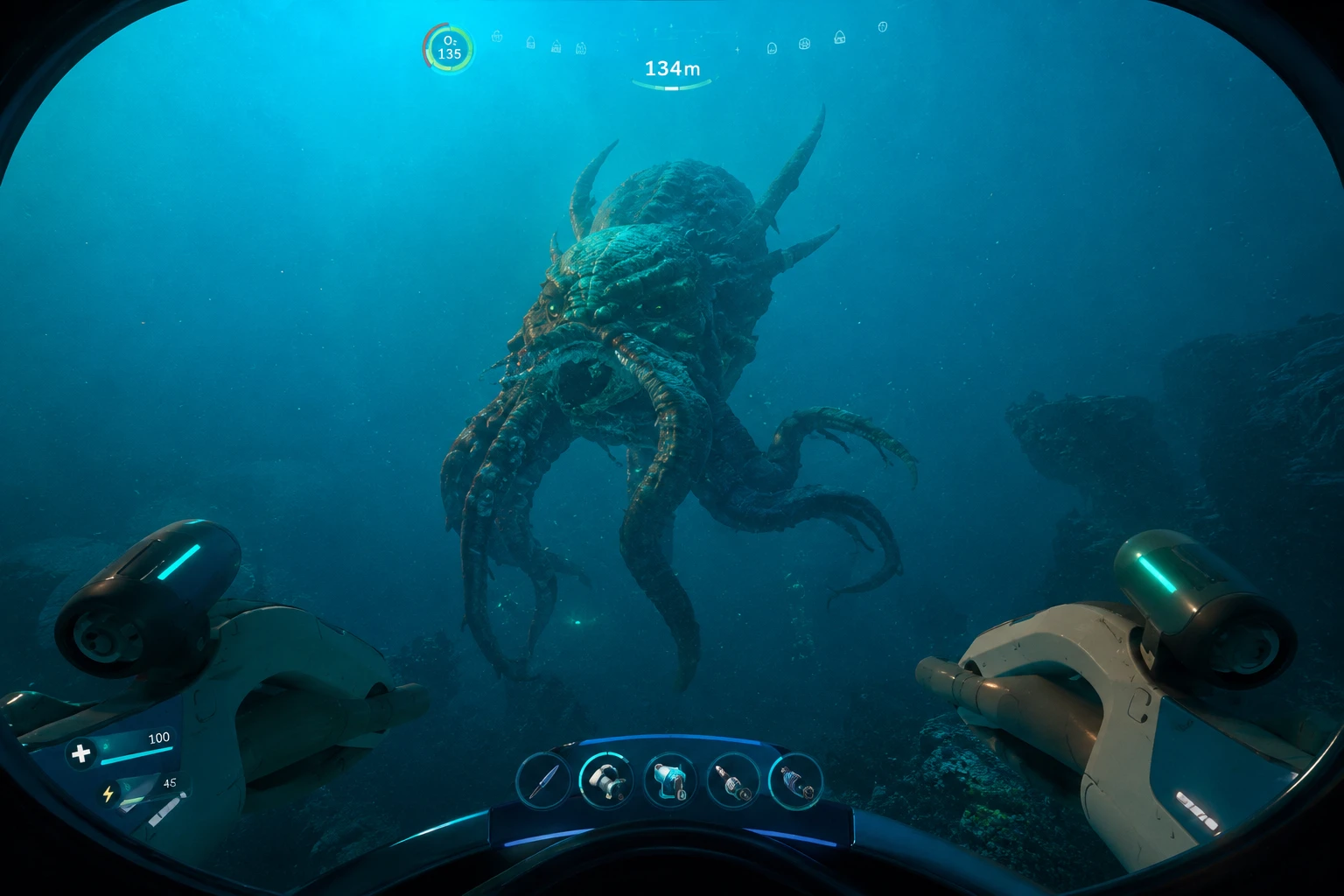
The Collector stands out as the most notorious predator currently active within the planetary waters. This massive organism – which closely resembles an enormous squid – is encountered frequently by players due to its close proximity to essential narrative landmarks. Among the available titans, this creature features the highest encounter rate on the map.
Its primary hunting grounds are located inside the deep trenches separating major sectors to the east of the starting lifepod. These chasms fragment the Alien Ruins in multiple directions, requiring players to navigate through them to advance the plot. Most encounters occur when a diver travels roughly 800 – 1000 meters eastward from the capsule.
An abrupt change in the background music serves as an immediate warning that the predator is closing in, indicating a need to turn back. Unprotected divers outside the Tadpole vehicle face instant death upon detection. However, pilots operating a Tadpole can successfully flee after the vehicle absorbs a certain amount of structural damage.
A camouflage biomodifier helps when scanning the Collector or escaping its grip. However, survival usually requires the Tadpole vehicle, a Repair Tool, and speed upgrades.
Territory restrictions regarding the Shiver
The next threat is the Shiver – an ancient leviathan that quickly went viral. This creature features prominent wings, a massive beak, and teeth that match the total size of a Tadpole.
Fortunately, players can completely avoid encountering the Shiver during standard gameplay unless they deliberately seek it out. In the current build, this predator spawns exclusively outside the boundaries of the active game map, situated west of the initial lifepod. Reaching this zone requires moving continuously toward the massive tree extending above the water surface.
Traveling approximately 350 meters in this direction triggers a system error warning indicating an unfinished sector where construction is entirely blocked. Proceeding past this automated warning causes three or four Shivers to materialize simultaneously out of nowhere, immediately devouring both the diver and the Tadpole vehicle.
Encounter mechanics for the Big Jaw
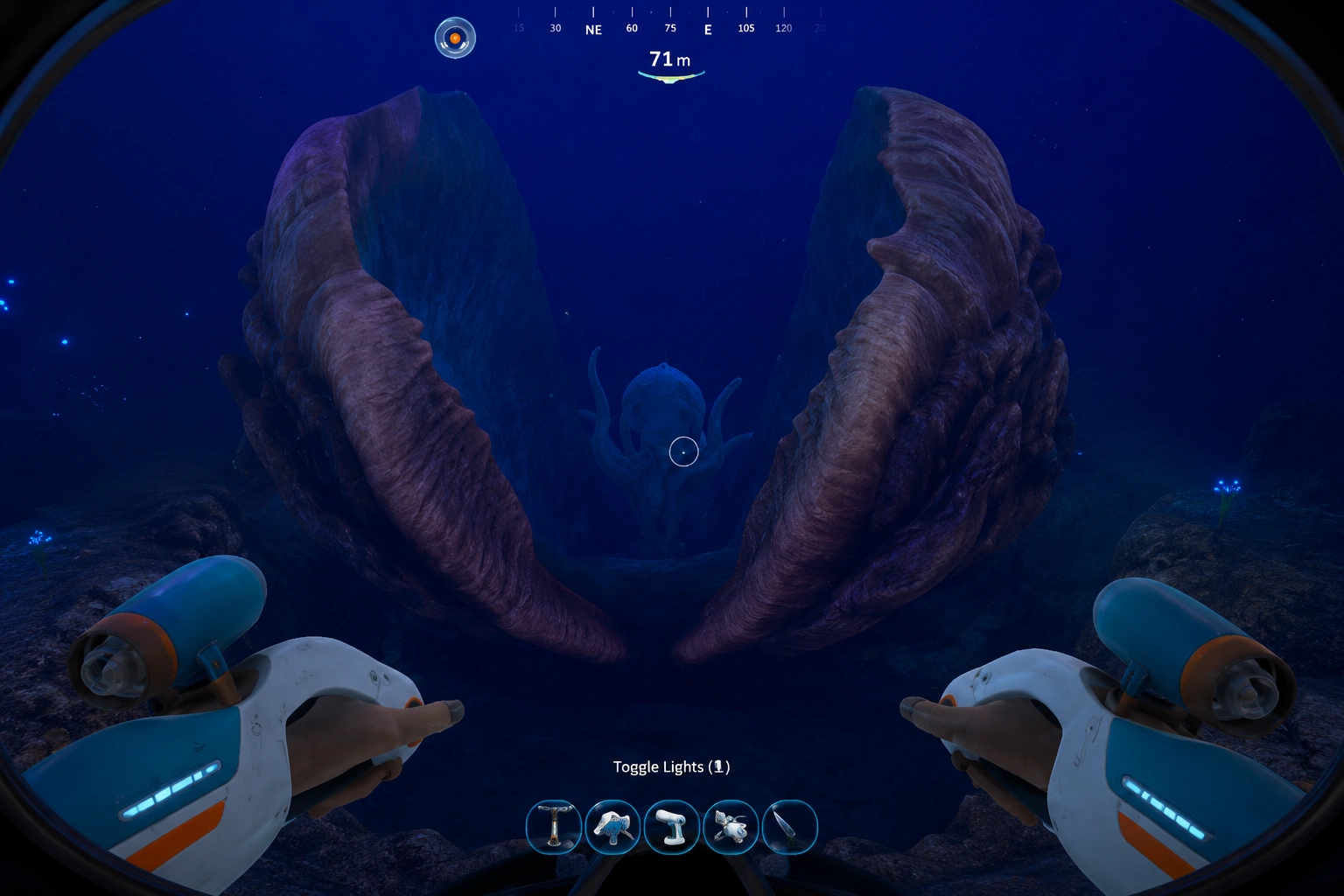
The Big Jaw presents a highly unusual behavioral pattern because it remains completely stationary and can be bypassed with proper caution. Despite its lack of mobility, entering its immediate reach results in instantaneous death. This leviathan takes the form of an immense bivalve mollusk that resembles an inert object at first glance, though looking inside reveals a living organism.
Locating the Big Jaw requires navigating roughly 325 meters south of the starting lifepod and descending to a depth of 60 meters. At these coordinates, the colossal shell becomes clearly visible, protruding conspicuously in the middle of the water column.
Divers can safely enter the interior of the shell to search for valuable resources, which require a Sonar Resonator to successfully harvest. However, players must avoid the internal pink tentacles at all costs, as disrupting them causes the shell to shut down immediately. Escaping the closure is nearly impossible, though players can technically cut the tissue if they remain completely undetected.
Distribution patterns of the Deepwing Brood
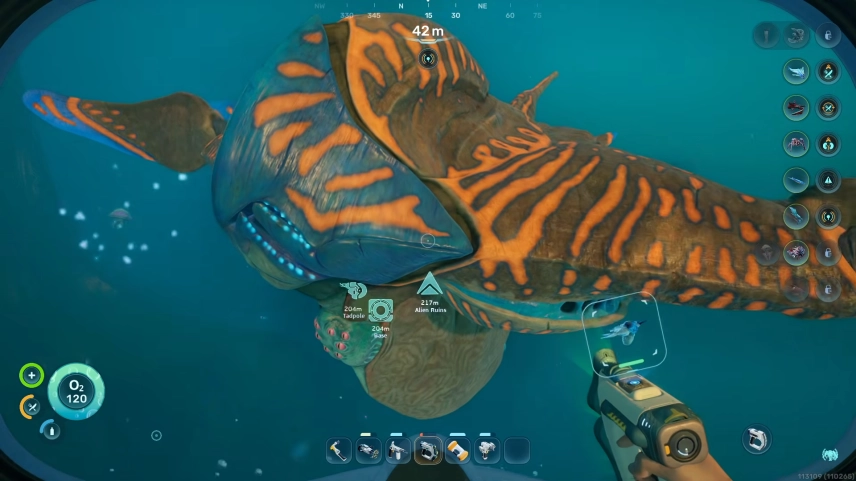
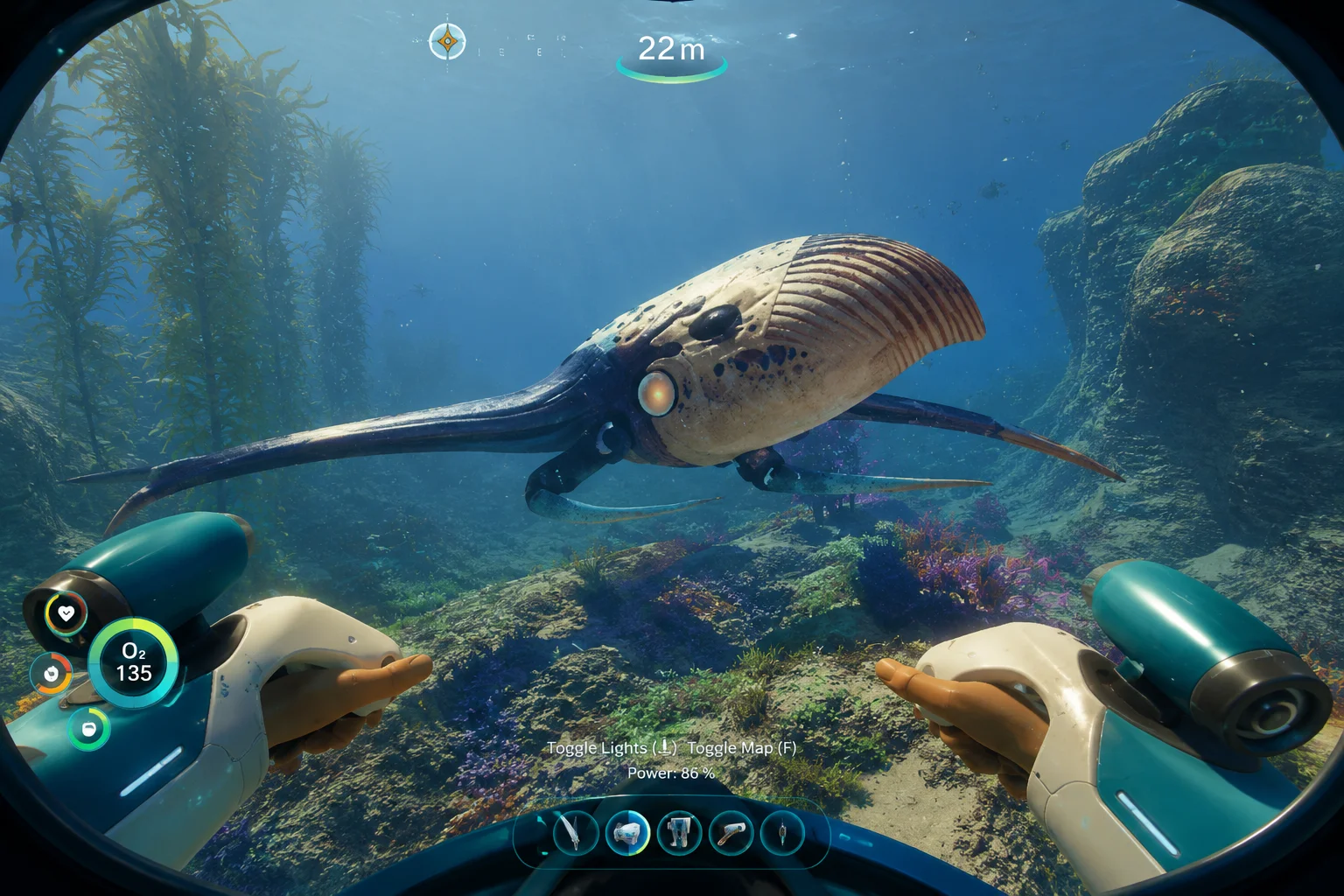
The final entity inhabiting the environment is the Deepwing Brood – a massive creature that many explorers might overlook entirely during their journey. This leviathan wanders through various sectors of the open ocean and remains entirely peaceful toward human divers. Its omission from certain predatory classifications likely stems from this harmless behavior, though its physical dimensions easily match the scale of a leviathan.
Encountering this gentle giant during the current early access build is exceedingly rare due to its minimal population density. The creature functions similarly to the Reefback from the original title, serving as a rare and majestic sight within the deep ecosystem.