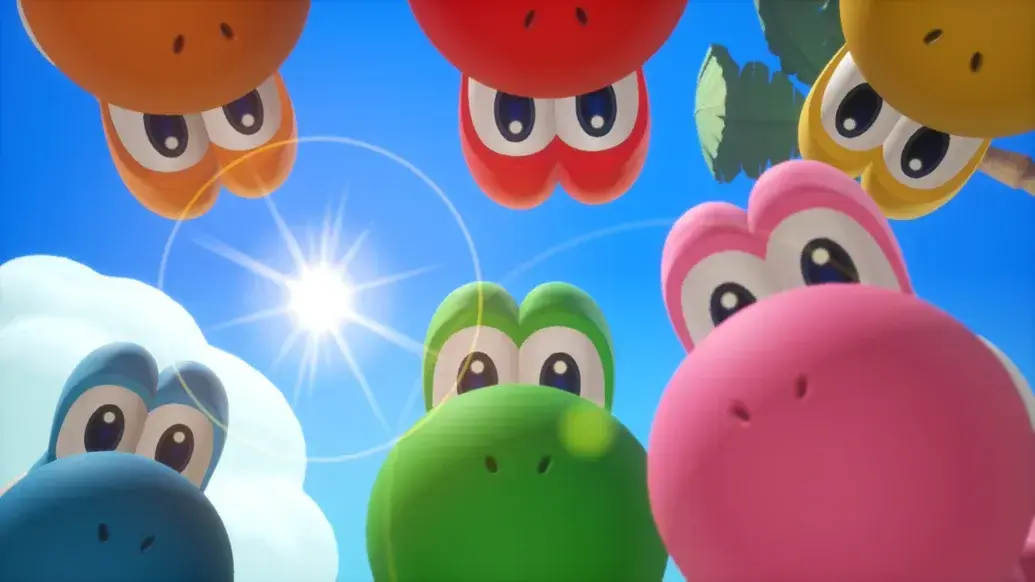

Nintendo’s newest Yoshi title arrives as something genuinely special – a game designed with children firmly in mind, where there’s no real danger, no way to fail, and the biggest challenge is simply figuring out what comes next. Yet beneath this accessible surface lies something that appeals far beyond the youngest players. The entire experience pivots on a single, brilliant concept: discovery. Yoshi and the Mysterious Book stands as a genuine gift.
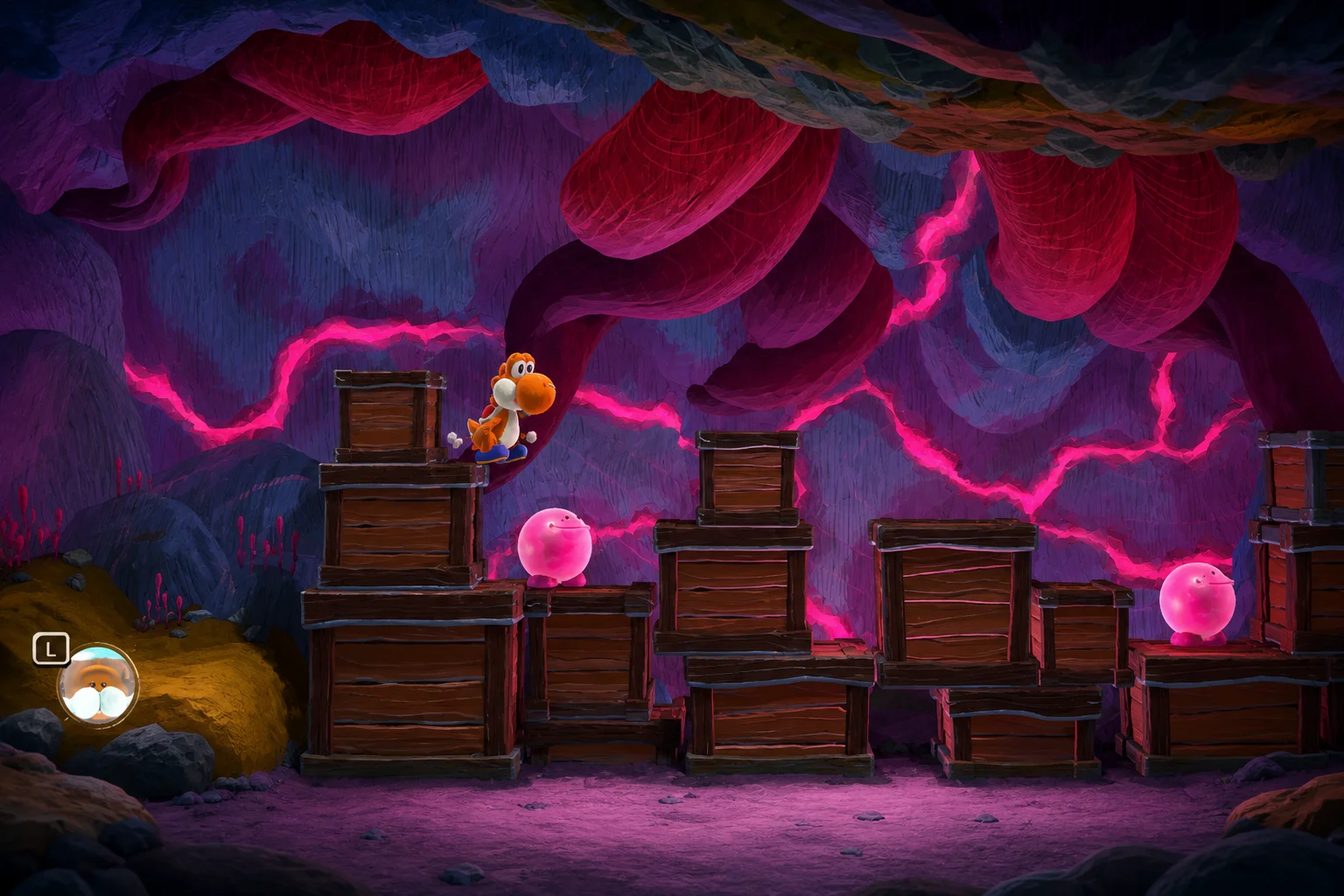
The visual approach initially caught me off guard. Drawing inspiration from Yoshi’s Island – the SNES masterpiece built from layered cardboard and pastels – this new adventure shifts away from full paper aesthetics toward chunky 3D objects. The level edges still carry that sketch-like quality, while Yoshi’s animation takes on a slightly choppy quality that sometimes resembles pop-up book drawings. At first, these schematic borders puzzled me.
Yoshi’s Island transformed the platformer genre through raw invention, but fundamentally it remained a point-A-to-point-B experience – start on the left, move right, advance. When I reached what I believed was the level’s end in Yoshi and the Mysterious Book, something unexpected happened: nothing. No progression. The screen didn’t scroll. I was still on the same level, which meant the game had entirely different ideas about how levels should conclude.
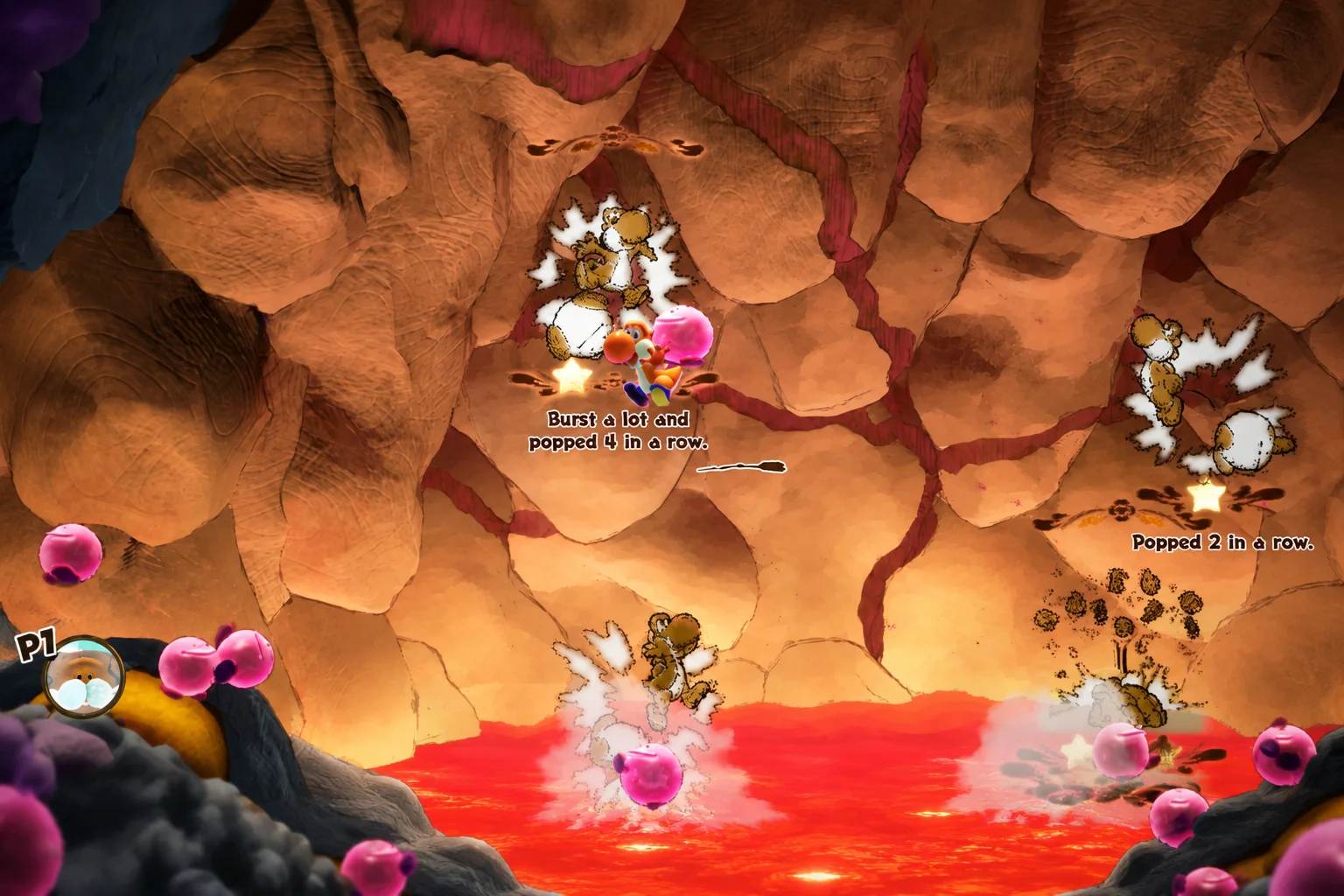
The framework makes sense once you understand it. Here, Yoshi takes on the task of filling blank pages in an anthropomorphic encyclopedia. Each book spread – or DPS, to borrow publishing terminology – represents a new location, and each level focuses on a specific creature inhabiting that space. You might arrive at a Remote Island to learn everything possible about guano birds, those diamond-shaped seagulls seemingly native to Yoshi’s own island.
Learning about a creature goes far beyond simple left-to-right movement. This remains a 2D platformer packed with platforming elements, but the core difference lies in exploration rather than constant forward progress. What happens when Yoshi tries eating the guano bird? What if he throws an egg at it? What if the egg bounces into fire? Where might it build a nest?
Two important observations emerge here. First, anyone familiar with Yoshi platformers will recognize the move set – barely changed across years. Yoshi grabs objects with his tongue, swallows them into eggs, and flings those eggs for fun and effect. The flutter jump remains intact, beautifully tense as ever. Ground pounds work the same way. He can carry items on his back where Mario and Luigi once rode, deploying them when needed. Perhaps it’s a flower enabling him to plant growth with each step. Perhaps it’s an apple someone else craves. Perhaps it’s something that destroys barriers.
Second, treat every item as part of a chemistry set. This is genuine experimentation – try this with that. Sometimes you’re just determining creature properties. Sometimes you’re reaching a location – that’s where obstacles and platforming come in. Sometimes you’re exploring how it interacts with its environment. Sometimes you’re hunting its family. From these straightforward ideas emerge levels that function as discovery sequences.
Each level contains one major revelation – the key insight about that creature – before returning to the book spread, where you can either discover new creatures or complete any earlier findings you missed. This design shines because learning about one creature frequently unlocks opportunities for studying others. The entire ecosystem interconnects and strengthens the whole experience.
I’ll avoid major spoilers since Yoshi and the Mysterious Book delivers one beautiful revelation after another. But I especially loved the creature that sticks to objects and transforms their behavior, and another that’s somehow half chewing gum, half trampoline. Dozens of such creatures populate the game. It’s a genuine menagerie. All of this comes alongside bosses, puzzles, and endless charming jokes and asides. The levels themselves span everything – forests full of tree cavities, beaches with pirate ships resting in nearby caves. This is a game overflowing with playgrounds.
For children, it’s simply wonderful. But for adults – particularly those old enough to have played Yoshi’s Island in its time – something different emerges entirely. Physics has always been gaming’s secret ingredient in Mario games, yet Yoshi’s Island truly developed these concepts by exploring a particular material physics within its world, something later visible in games like Angry Birds. On the SNES, Yoshi’s universe became a place where enemies could be crushed, squeezed, or deformed. It wasn’t just a Newtonian world anymore, but one following Young’s modulus principles. Someone explained it to me once, but I won’t misrepresent it here.
Strangely, when I reflect on Yoshi’s Island, I think less about A-to-B level design and more about something remarkably similar to Yoshi and the Mysterious Book. Both are games about experimentation, about interacting with environments and discovering their possibilities. A watermelon becomes a machine gun. A dandelion seed turns psychedelic. That yellow substance covering surfaces invites digging – but also getting stuck. What a discovery.
I’d say Yoshi and the Mysterious Book feels less like a sequel and more like a game inspired by what Yoshi’s Island made you feel – a title about imagination and that peculiar meticulousness Nintendo has always brought to platformers. It’s surprise. It’s delight. It’s a perfect fit for younger players discovering games for the first time.