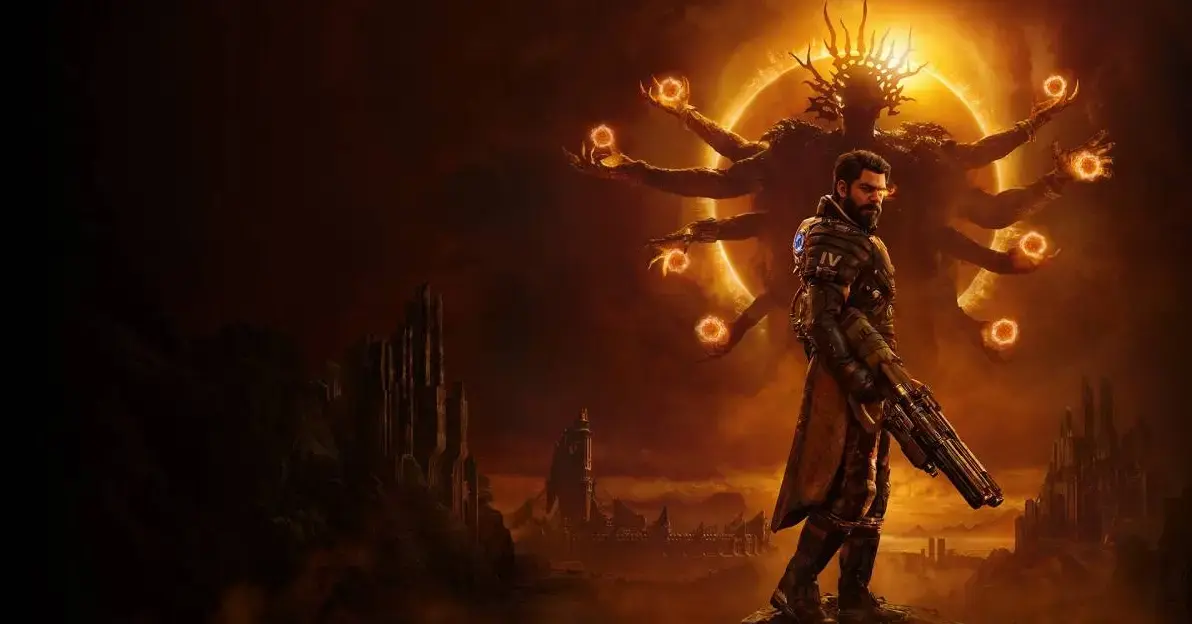

The newly released PlayStation 5 exclusive introduces a distinct “ballet of bullets” philosophy – a high-stakes framework demanding surgical precision paired with constant tactical risk from the player.
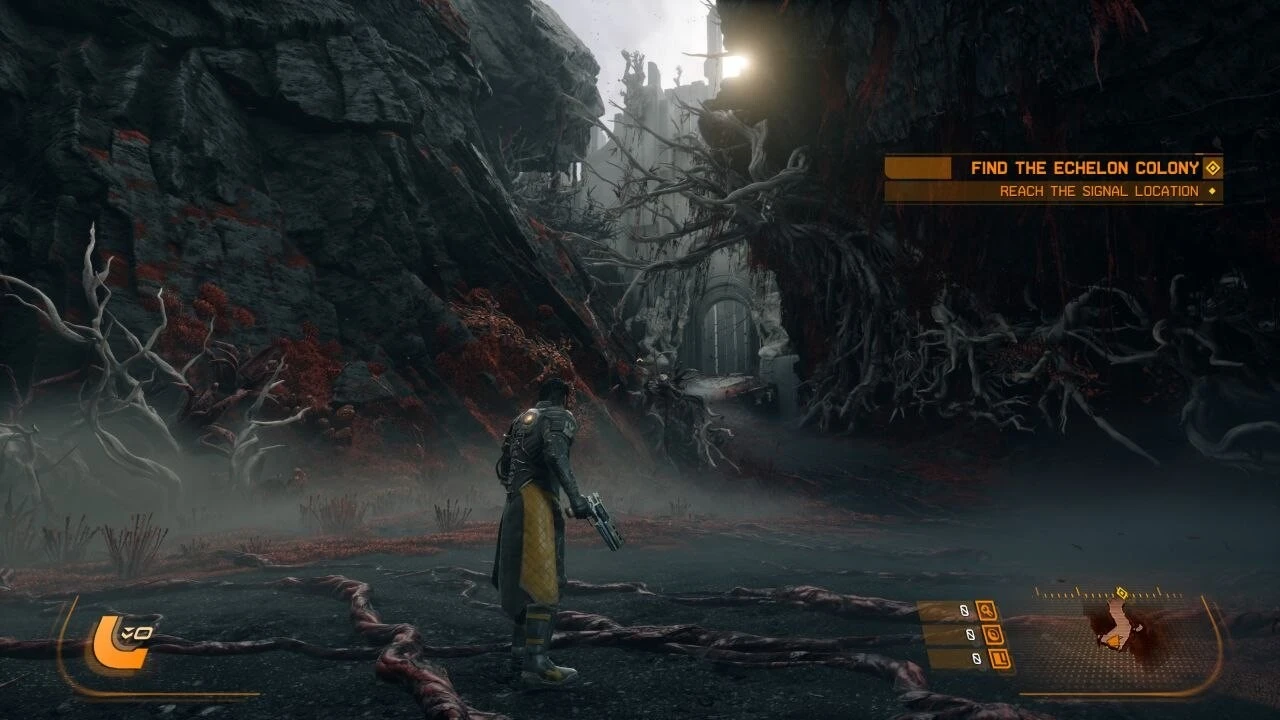
Developed by Housemarque, Saros stands as a third-person science-fiction roguelite action game that transports players directly onto the amber plains of the planet Carcosa. Here, a high-ranking operative named Arjun Devraj undertakes a hazardous expedition to track down a vanished colony while unearthing his own forgotten past. The narrative zeroes in on deeply human accounts of survival and redemption, merging high-intensity combat with thematic inquiries into identity and the true cost of authority amidst a surreal cosmic backdrop. Editorial teams have begun analyzing the terrain of Carcosa to decipher the exact mysteries hidden within its sands.
Prospective buyers looking at the title will find several compelling incentives to invest in this cosmic adventure
- It represents one of the most forgiving roguelite experiences available, sparing your hardware from rage-induced damage.
- The integrated Eclipse mechanic fundamentally reshapes the environment, preventing the repetitive loop from becoming stale.
- The game delivers relentless action capable of pushing physical inputs to their absolute limits.
- Deeply integrated gameplay modifiers allow players to craft individual styles without rigid limitations.
- Fans who found themselves captivated by Returnal, the studio’s previous milestone, will find these elements amplified threefold.
Conversely, certain design choices may dissuade specific audiences from picking up the controller
- Players unwilling to embrace repeated deaths and complete restarts to overcome major bosses will face frustration.
- Those who dislike ambiguous, fragmented narratives that require independent deduction will find the storytelling format unappealing.
Narrative foundation and exploration motives
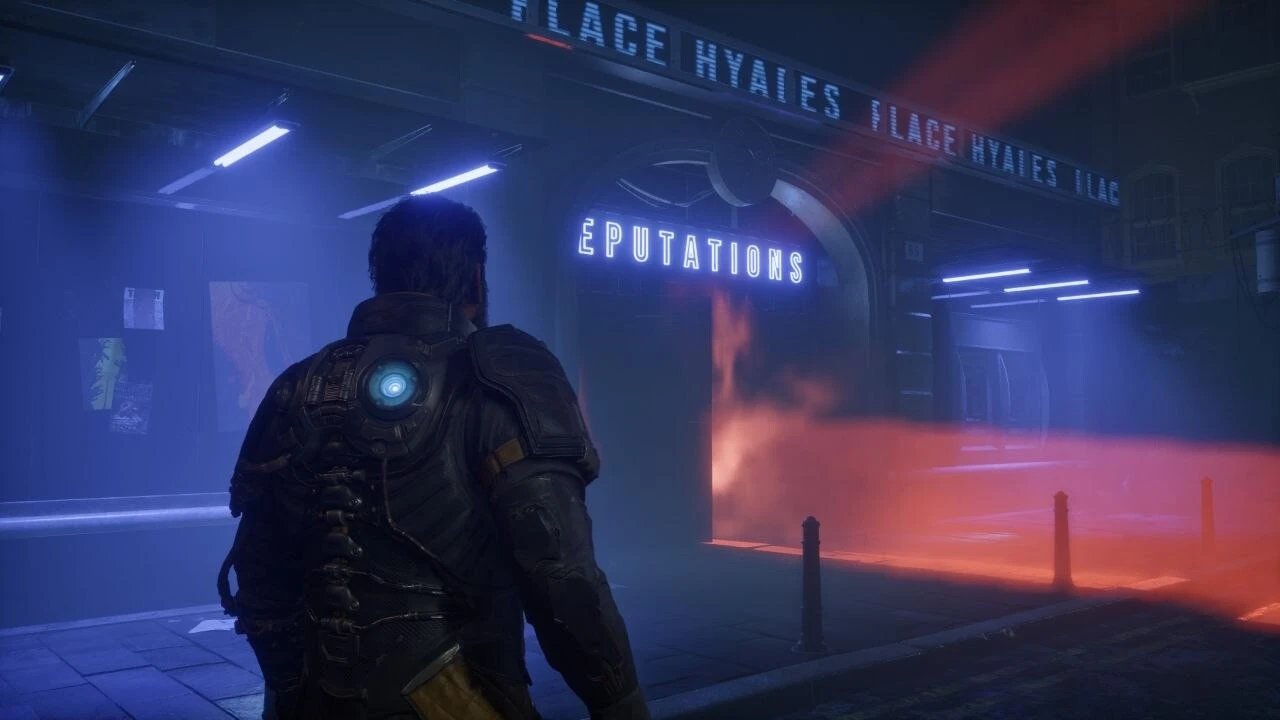
The journey begins on the enigmatic planet Carcosa, where players assume control of Arjun Devraj, an elite commander representing the Soltari corporation. Arjun and his specialized crew arrive at the outer fringes of known space not under the banner of conquest, but as investigators driven by a specific mandate. Charged with uncovering the fate of an extraterrestrial colony that vanished without a trace, the protagonist encounters a surreal environment governed by an ancient, ominous rhythm. This sets the stage for a grim search across a celestial graveyard, where the remnants of human ambition lie buried beneath alien sands.
A significant portion of the backstory unfolds through interactive flashbacks, though these memory fragments occasionally generate more questions than definitive answers.
At its emotional core, the narrative operates as a profound character study weighed down by deep regret and personal loss. Arjun maintains constant communication with a network of surviving crew members, a dynamic that gradually exposes a complex web of interpersonal relationships and a mounting sense of dread as the team battles the destabilizing psychological influence of the planet.
Central to this interpersonal tension is Arjun’s underlying personal motivation – an uncompromising search for an individual close to him. This emotional pursuit frequently collides with the cold, calculated logic of Primary, the mysterious artificial intelligence overseeing the colonial infrastructure, raising a critical question of whether human empathy serves as an asset or a fatal vulnerability in an environment that demands absolute pragmatism.
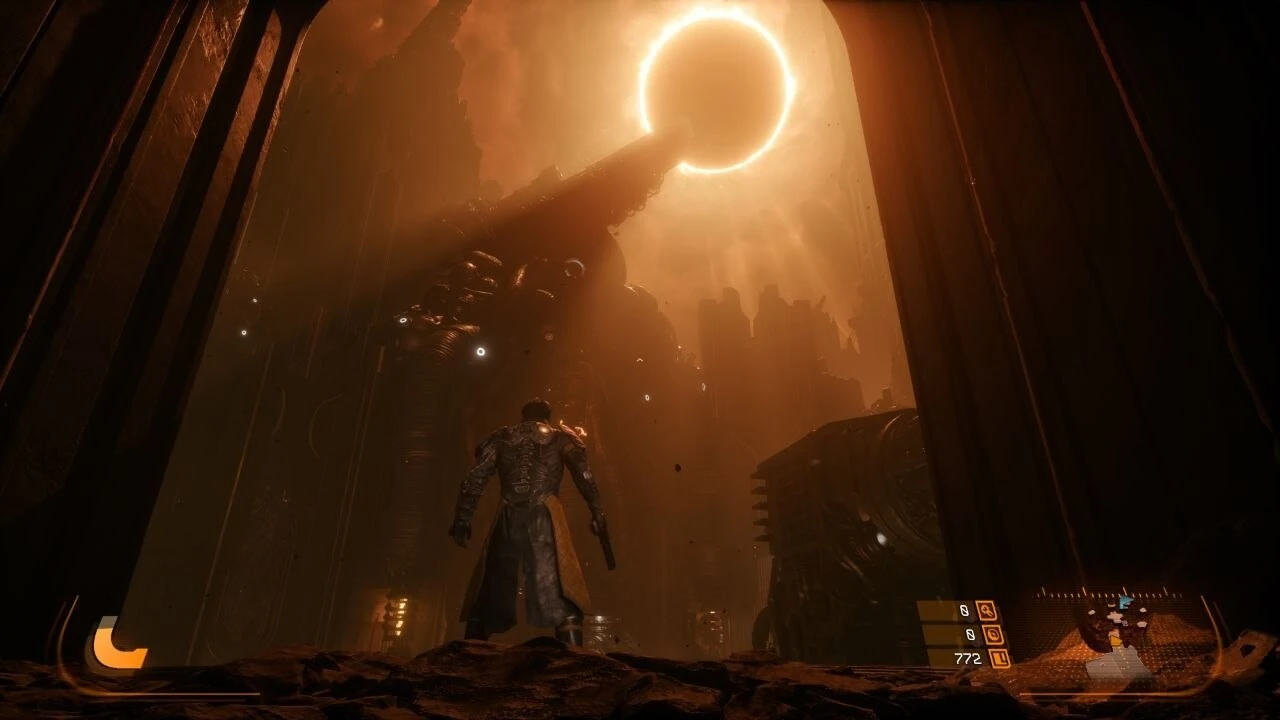
However, the planet’s ultimate secret resides within the Eclipse, a celestial phenomenon serving as the narrative’s primary thematic anchor. As the local sun disappears, Carcosa warps into a nightmare composed of fractured realities where the boundaries governing time and individual identity dissolve entirely, allowing Arjun to discover ancient murals and audio logs left behind by previous explorers who succumbed to the planet’s localized madness.
As the continuous cycle of death and resurrection pulls Arjun further into these hidden depths, the narrative evolves into a meditation on what it truly means to return stronger in both body and soul. The protagonist must confront an alien presence that actively challenges the very foundations of his personal recollections.
Ultimately, the overarching plot delivers an intriguing and complex experience that aligns perfectly with the established conventions of the roguelite genre and its science-fiction setting. For individuals who enjoy deciphering the enigmas of ancient civilizations alongside intricate human relationships, Saros provides substantial narrative depth.
Core gameplay mechanics and progression systems
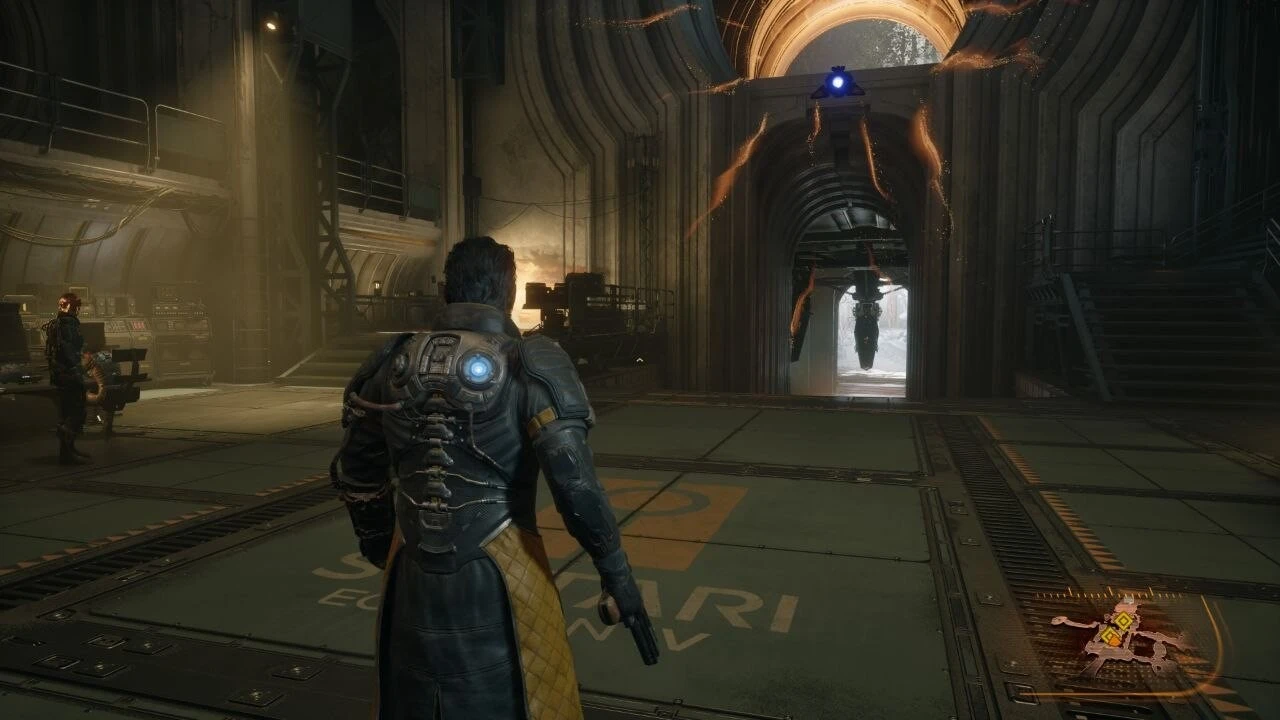
Mechanically, the title adheres to standard roguelite loops, dividing the experience into distinct runs that commence with baseline equipment and statistics. Throughout each attempt, players systematically upgrade their capabilities, unlock superior weaponry, and eliminate diverse adversarial forces before facing an area boss at the conclusion of each biome to advance the plot. While titles of this nature inherently present a steep challenge – requiring frequent deaths during the initial hours – the loop is structured so that the process remains highly engaging.
The fundamental gameplay loop operates on a recognizable accessible-yet-deep design pattern, where exploring biomes and defeating enemies culminates in boss encounters that unlock subsequent sectors.
Combat relies on a unique design philosophy centered on a bullet-ballet archetype, demanding exceptional spatial accuracy alongside calculated risk-taking. Deviating from traditional shooters focused primarily on evasion, this game rewards aggression through the Soltari Shield, a defensive implement that actively absorbs incoming projectiles rather than merely blocking them. The kinetic energy harvested through this mechanism is funneled directly into Arjun’s right arm, converting it into an extremely potent offensive weapon. This specific cycle of turning defense into immediate offense forces players to operate continuously on the edge of danger, fostering a state of cognitive flow where defensive maneuvers and offensive output are entirely interdependent.
The overarching gameplay cycle splits into two distinct phases defined by planetary stability, which shatters completely upon the onset of the Eclipse. As this celestial event intensifies, the surrounding environment undergoes radical visual and structural transformations, significantly raising the stakes by introducing highly aggressive enemies and lethal projectiles capable of permanently reducing maximum health pools for the duration of the current run.
Despite the increased danger, the Eclipse simultaneously presents opportunities to maximize run efficiency. The event yields higher quantities of Lucenite – the primary progression currency – while granting access to distorted weapon variants that carry unique tactical advantages. Navigating these procedurally generated maps requires constant real-time calculation, forcing players to choose between pushing through the darkness for top-tier equipment or retreating to safer zones.
The introduction of the Eclipse alters nearly every fundamental gameplay element, ensuring the experience remains varied across extended play sessions.
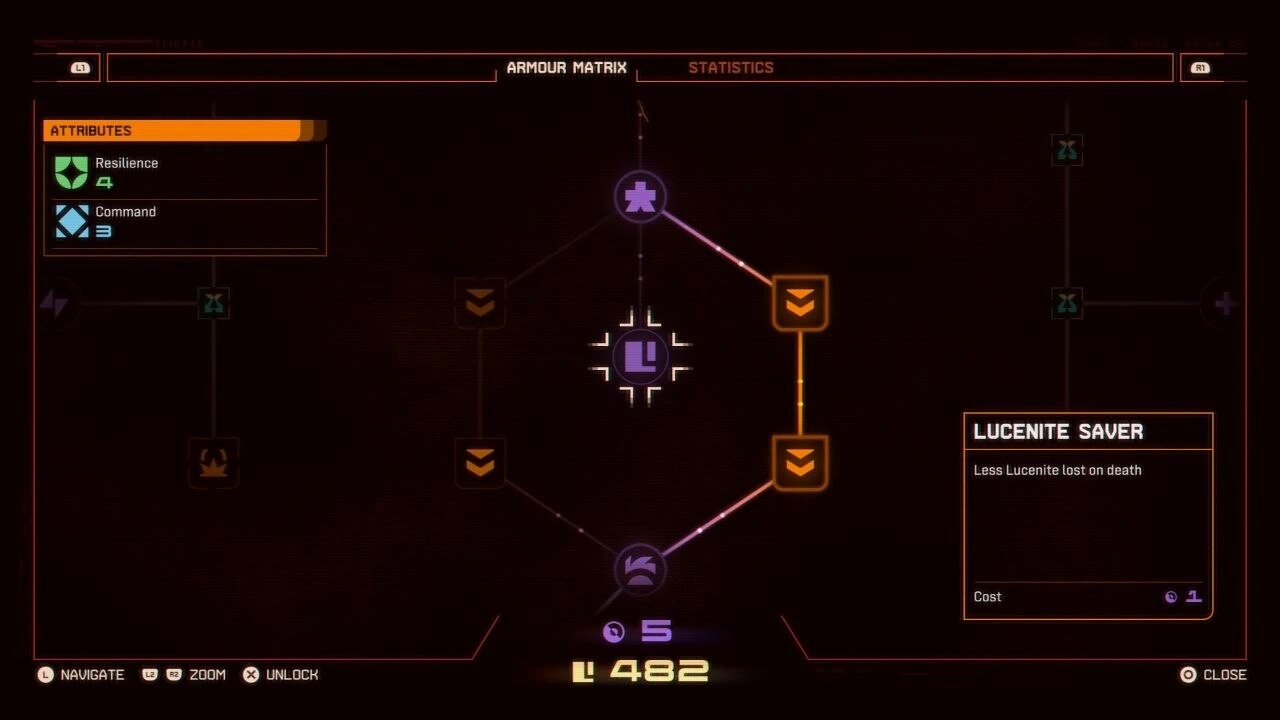
A robust persistent progression framework ensures that unsuccessful expeditions still contribute meaningfully toward final victory. Players routinely invest accumulated resources into a comprehensive skill tree, unlocking permanent stat boosts and suit modifications that persist across successive runs.
The available upgrade paths feature a specific skill that grants two additional lives following a defeat, an option that proves critical to unlock early in the experience.
Options for difficulty adjustment
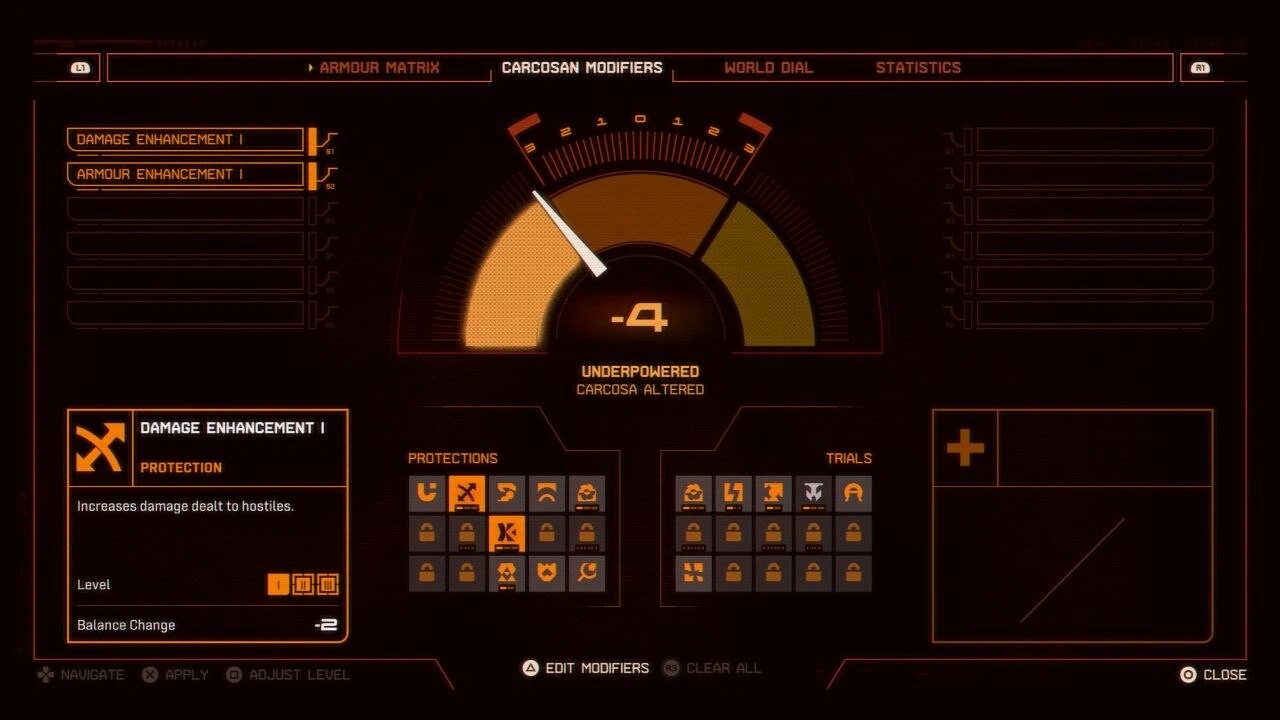
The development team implemented specific accessibility measures to ensure a broader segment of the player base can successfully reach the credits. Upon defeating the second major boss, players gain access to specialized modifiers stationed at the primary base, which allow for granular customization of the gameplay experience by balancing specific buffs against corresponding penalties. This system enables users to adjust parameters such as incoming enemy damage or mitigate the severity of health loss to match individual capabilities.
To maintain balance, most advantages require a direct operational trade-off, such as increasing player power while causing dropped enemy resources to disappear at an accelerated rate. However, for players experiencing severe difficulty with the roguelite format, the balancing requirements can be entirely deactivated in the system menus, allowing players to maximize weapon damage and other assistance options to bypass traditional genre barriers.
The modular customization options provide extensive flexibility, offering players substantial room to experiment with mechanical configurations.
Player experience and sensory engagement
The combination of thorough biome exploration, an expansive weapon sandbox ranging from automatic rifles to specialized crossbows, aggressive enemy types, and brutal boss encounters creates an addictive loop that keeps players engaged until physical fatigue sets in. Death acts not as a deterrent but as a learning mechanism, as players memorize boss patterns, identify optimal weapon configurations, and return to the fray with enhanced capabilities. This continuous learning curve provides sustained motivation, amplified by continuous onscreen action and a refined integration of DualSense haptic features.
The game consistently introduces fresh elements to the experience, ensuring substantial post-game content remains available even after completing the main narrative.
Technical performance on PlayStation 5
Performance on the base PlayStation 5 console remains highly optimized throughout the experience, maintaining a consistent 60 frames per second with only rare instances of minor framerate drops. While software bugs were entirely absent during testing, a single application crash did occur during an intense combat sequence; however, the integration of a constant autosave system mitigated any significant loss of progress.
Visual design and aesthetic style
The title distinguishes itself visually through a specialized aesthetic defined by warm, golden tones. This specific color palette infuses the science-fiction setting with an aura of ancient grandeur, rendering ruined monuments and advanced technological structures as artifacts of a broader celestial history illuminated by a perpetual sunset. Intricate armor details and sprawling landscapes combine to form a highly immersive, volatile alien world.
Audio design and musical score
The acoustic landscape features a dramatic blend of sweeping cinematic orchestral arrangements and aggressive synthesizer instrumentation that intensifies dynamically during combat and pivotal narrative shifts. Weapon sound effects convey substantial kinetic weight, while transitions into the Eclipse phase are marked by eerie, dissonant audio shifts that effectively establish an alien, oppressive atmosphere.
Long-term impressions and core takeaways
The game will ultimately be remembered for its intuitive yet epic execution of bullet-ballet combat, rewarding aggressive tactics via its unique energy-absorption mechanics. While maintaining a high skill ceiling, the experience remains accessible through its persistent progression loops and customizable modules, making the harsh environment of Carcosa manageable for newcomers while the mystery of Arjun’s quest provides a compelling reason to see the journey through to its conclusion.
Essential facts regarding the release
- The title is a narrative-driven PlayStation 5 exclusive representing an entirely new intellectual property.
- It utilizes a roguelite structural framework that penalizes mistakes while maintaining overall player accessibility.
- Progressive upgrades and customizable gameplay modules allow for a significant reduction in overall difficulty.
- The narrative unfolds on a mysterious planet marked by the disappearance of human colonies and an ancient alien civilization.
- The game fully leverages DualSense capabilities and console hardware to justify its premium hardware requirements.
| Saros | |
|---|---|
| Genre | Action, roguelite |
| Platforms | PlayStation 5 |
| Player count | Single-player |
| Developer | Housemarque |
| Publisher | PlayStation |
| Time to complete | 15 – 25 hours |
| Release date | April 30, 2026 |